Results
No exact match, try with fewer filters or a more generic term
At the core of addressable pixel lighting is the ability to control individual pixels or pixel groups. Each addressable pixel node is controlled by an integrated circuit (IC) that receives digital data from an addressable LED controller and applies the corresponding control values to the LED output.
In common daisy-chained digital LED architectures, the controller transmits serial data along the pixel chain. Each node processes the data assigned to it and passes the data along to downstream pixels.
This architecture enables:
Independent control of individual LEDs
High-resolution animations and transitions
Real-time dynamic effects across large installations
For engineers and designers, addressable pixel technology provides a level of control that goes far beyond conventional non-addressable lighting systems.
SPI pixel-to-pixel solutions are designed for applications where lighting plays an active role in communication, interaction, or storytelling.
They are widely used in architectural façades, entertainment venues, retail environments, and immersive installations, where dynamic lighting effects enhance both functionality and visual impact.
In these contexts, lighting is no longer simply a source of illumination; it becomes a programmable surface capable of expressing motion, rhythm, and visual identity.
A complete SPI pixel-to-pixel system is built around a set of components working together:
Controllers, which generate and manage pixel-level control data.
Addressable LED modules or strips, in which pixels or pixel groups can be controlled independently.
Repeaters and converters, which extend signal reach or adapt interfaces in larger installations.
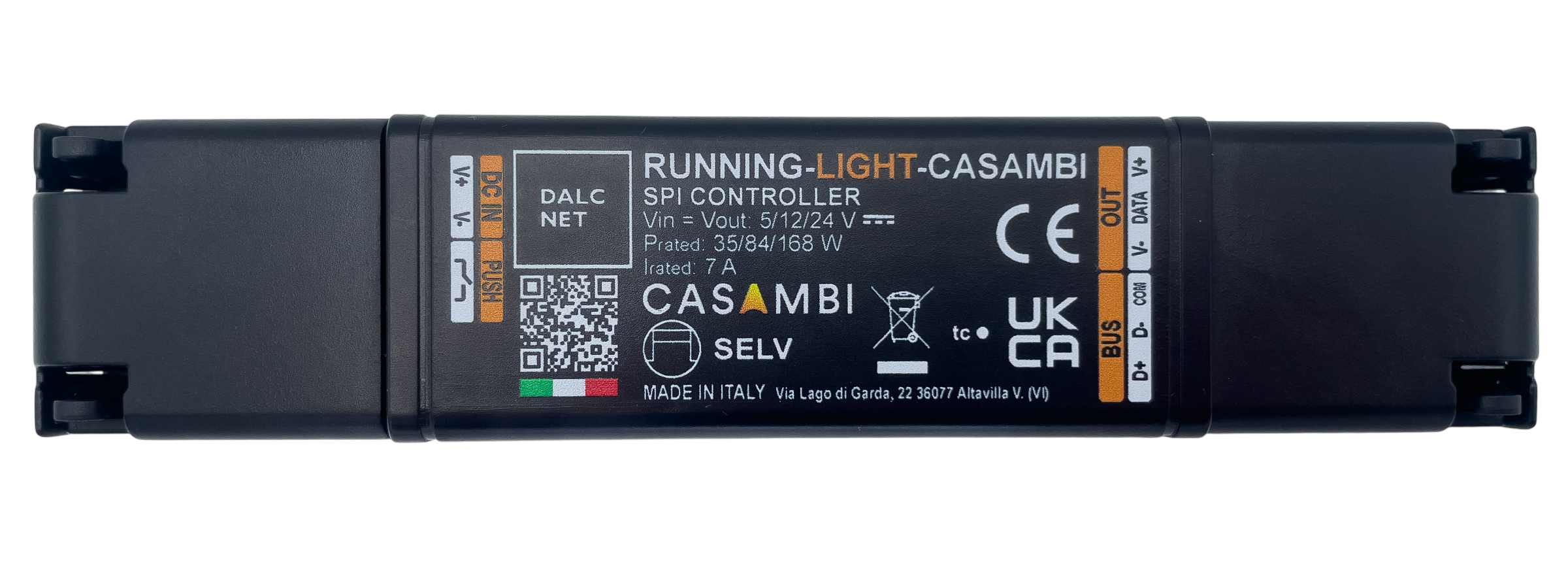
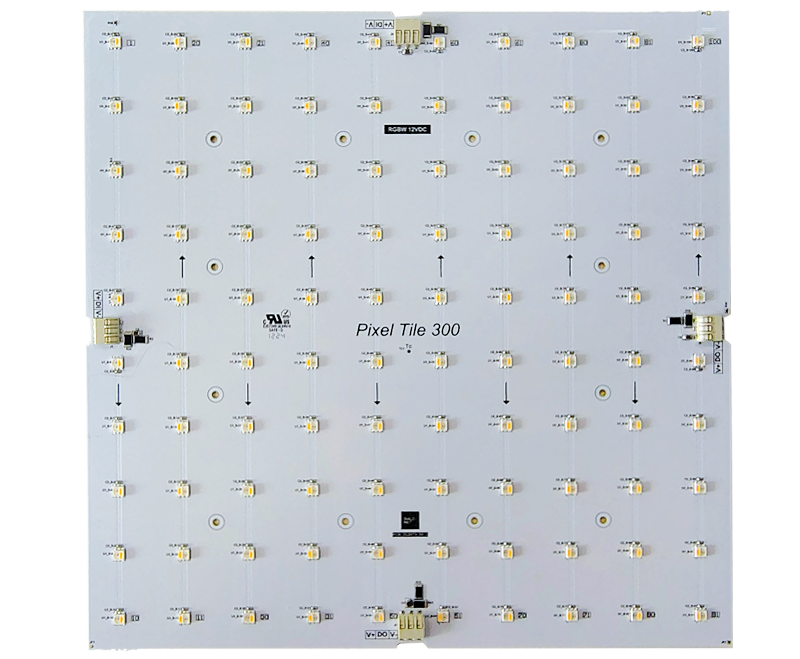
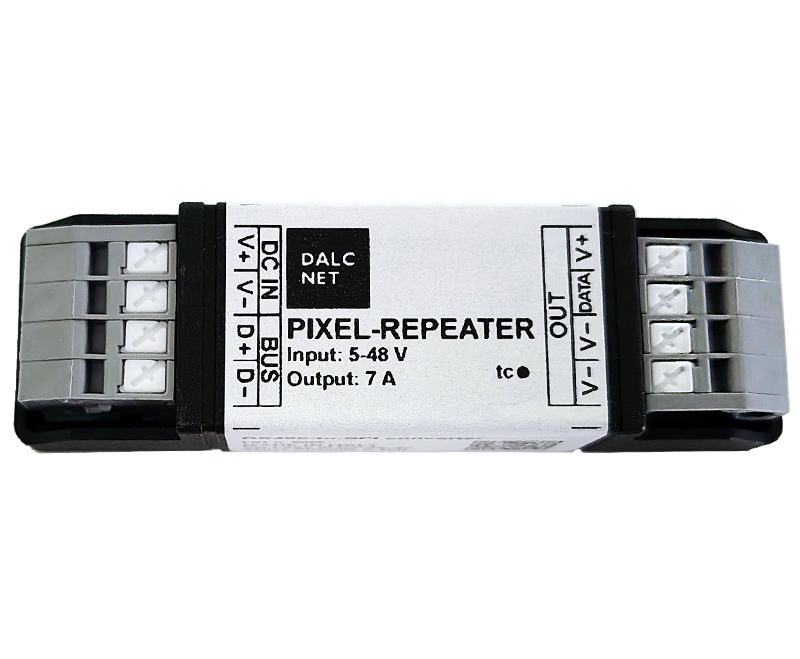
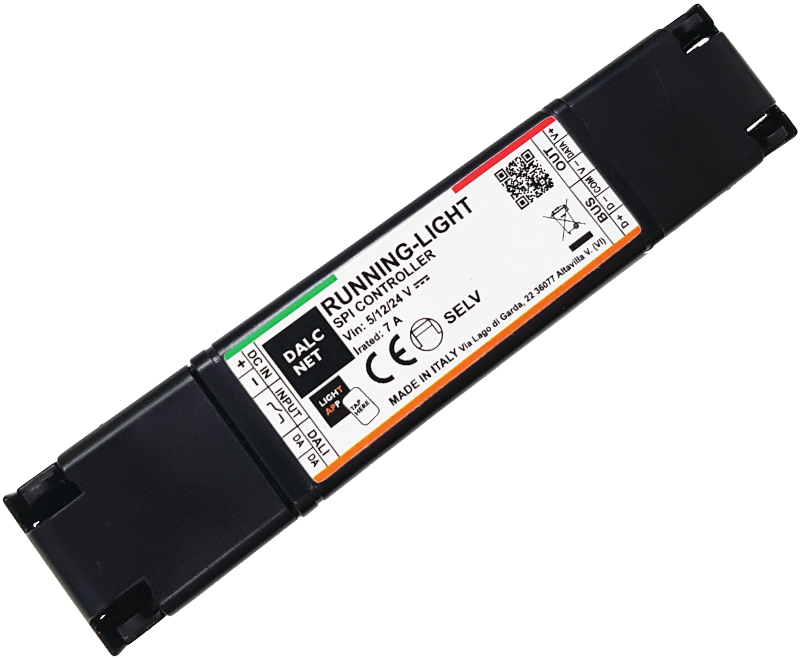
Dalcnet products such as RUNNING-LIGHT, PIXEL-TILE-300-RGBW-12V, RUNNING-LIGHT-CASAMBI, and PIXEL-REPEATER perform different roles within this ecosystem, from the generation of pixel-control data to signal extension and modular lighting integration.
Pixel repeaters extend the control link to remote addressable LED sections, allowing the same dynamic effects to be reproduced at greater distances from the controller.
SPI pixel systems support scalable lighting architectures, with compatible modules and segments added as the installation grows.
In larger systems, effective signal transmission and power distribution are key design considerations. Pixel repeaters extend control distances and help maintain consistent operation across complex or distributed installations.
This flexibility allows engineers to design lighting systems ranging from small decorative elements to large architectural façades and media installations.
As a lighting control manufacturer, Dalcnet develops SPI pixel-to-pixel solutions with a strong engineering focus on reliability, flexibility, and integration.
Dalcnet’s ecosystem includes advanced controllers and complementary modules designed to work together as an integrated system:
SPI controllers for pixel-level LED control.
Casambi-enabled solutions for wireless configuration and management.
Repeater modules for extending control distance and maintaining signal integrity in distributed pixel installations.
Solutions such as RUNNING-LIGHT-CASAMBI allow dynamic lighting effects—including speed, color, direction, effect selection, and color sequence—to be configured through mobile applications while maintaining precise pixel-level control.
This integrated approach enables designers and system integrators to develop sophisticated lighting systems while maintaining ease of use and performance.
SPI pixel-to-pixel technology sits at the intersection of lighting engineering and creative design.
It requires a deep understanding of signal management, power distribution, and control architecture while offering exceptional creative freedom.
Dalcnet solutions are designed to support both aspects, providing robust hardware platforms for engineers and flexible tools for designers working with dynamic lighting applications.
SPI pixel-to-pixel lighting represents the evolution of LED control from static illumination to programmable, dynamic systems.
By enabling precise control of individual pixels, it transforms lighting into a digital language capable of shaping spaces, experiences, and identities.
As a specialized lighting control manufacturer, Dalcnet develops solutions that bring this technology into real-world applications, supporting scalable and high-performance lighting architectures.
SPI pixel-to-pixel lighting is a form of digital LED control in which individual pixels or groups of LEDs can be controlled independently, enabling dynamic effects and animations.
In common addressable LED architectures, a controller sends serial digital data along a chain of pixels. Each pixel node processes the data assigned to it and passes the data on to downstream pixels.
Conventional non-addressable LED strips control LEDs or strip sections collectively, while addressable LED systems allow individual pixels or pixel groups to be controlled independently, enabling animations, gradients, and dynamic effects.
A pixel repeater extends the control link to remote addressable LED sections, helping maintain reliable signal transmission across longer or distributed installations. It can also reproduce dynamic lighting effects at remote LED sections.
Yes. Solutions such as RUNNING-LIGHT-CASAMBI combine SPI pixel control with Casambi wireless technology, enabling wireless configuration and control through Bluetooth-based applications.
They are used in architectural lighting, entertainment venues, retail environments, media façades, and immersive installations where dynamic visual effects are required.
SPI pixel systems provide fine-grained control, scalability, and flexibility, enabling complex lighting effects and high-resolution visual experiences in both small and large installations.