Results
No exact match, try with fewer filters or a more generic term
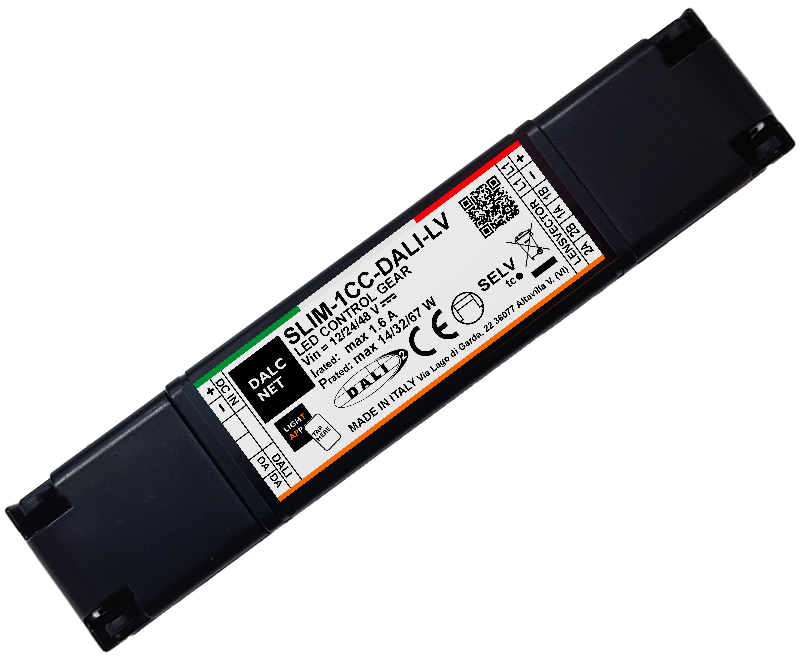
A DALI dimmer is a control device that regulates the brightness of LED fixtures through a digital communication bus. Within a DALI system, addressable control gear can be assigned individual addresses, allowing direct control at device level rather than circuit level.
This approach represents a shift from conventional control strategies. Instead of relying on circuit-level analog control or switching entire lines, a DALI dimmer executes digital instructions sent by a controller, supporting consistent and scalable system control.
DALI uses a low-voltage, two-wire communication bus that enables devices to exchange data independently of the power wiring. A single DALI bus supports up to 64 addresses for control gear and, in DALI-2 systems, up to 64 additional addresses for control devices. Control gear can be organized into logical groups, and predefined scenes can be recalled >Explore DALI Protocols
The dimmer interprets digital commands and regulates the electrical output supplied to the LED load. Depending on the device, this may involve constant-current or constant-voltage output, providing stable and precise dimming control.
In a DALI system, application controllers send commands to connected control gear over the DALI bus. Addressed control gear responds to commands sent to its individual address or a group address, as well as to broadcast commands.
Addressable control gear can be assigned individual addresses within the DALI system. Commands can therefore target individual devices or groups, while predefined scenes can be recalled.
This flexibility allows lighting systems to be configured without modifying the physical wiring.
One of the defining features of DALI dimming is bidirectional communication. Control gear not only receives commands but can also respond to queries with status information, supporting system monitoring and basic diagnostics.
The DALI dimmer receives digital commands over the DALI bus and regulates the electrical output supplied to the LED load. Output regulation can use techniques such as PWM or current regulation to provide stable dimming performance.
DALI dimmers are defined by their ability to operate as part of an intelligent control network rather than as standalone devices.
The use of a standardized protocol supports interoperability between compatible components from different manufacturers. This allows lighting systems to be designed with greater flexibility and adapted over time without major changes to the infrastructure.
Another key characteristic is scalability. A DALI installation can start on a small scale and expand into a larger system while retaining the same fundamental control principles.
DALI also provides standardized digital control of light levels, supporting accurate and repeatable dimming.
Wired DALI control is widely specified in professional applications that require coordinated lighting management, addressable control, and system feedback.
In offices, retail spaces, and hospitality environments, DALI dimming allows independent control of lighting zones, improving comfort and energy efficiency.
DALI systems can integrate with higher-level building management systems through suitable interfaces or gateways, enabling coordinated control alongside HVAC, sensors, and automation logic.
In complex projects such as museums, airports, or corporate buildings, the ability to individually address and query control gear can simplify commissioning and maintenance.
Selecting a DALI dimmer requires evaluating both electrical characteristics and system requirements.
Electrical compatibility with the LED load is essential. Depending on the application, the dimmer must provide the appropriate constant-current or constant-voltage output.
Channel configuration also affects system design, particularly in tunable white or multi-channel lighting systems.
Integration capabilities should also be considered carefully. In systems where monitoring or automation functions are required, support for the relevant DALI features becomes an important selection criterion.
Dalcnet DALI dimmers are designed to operate reliably within professional lighting control systems, offering stable performance and flexible configuration.
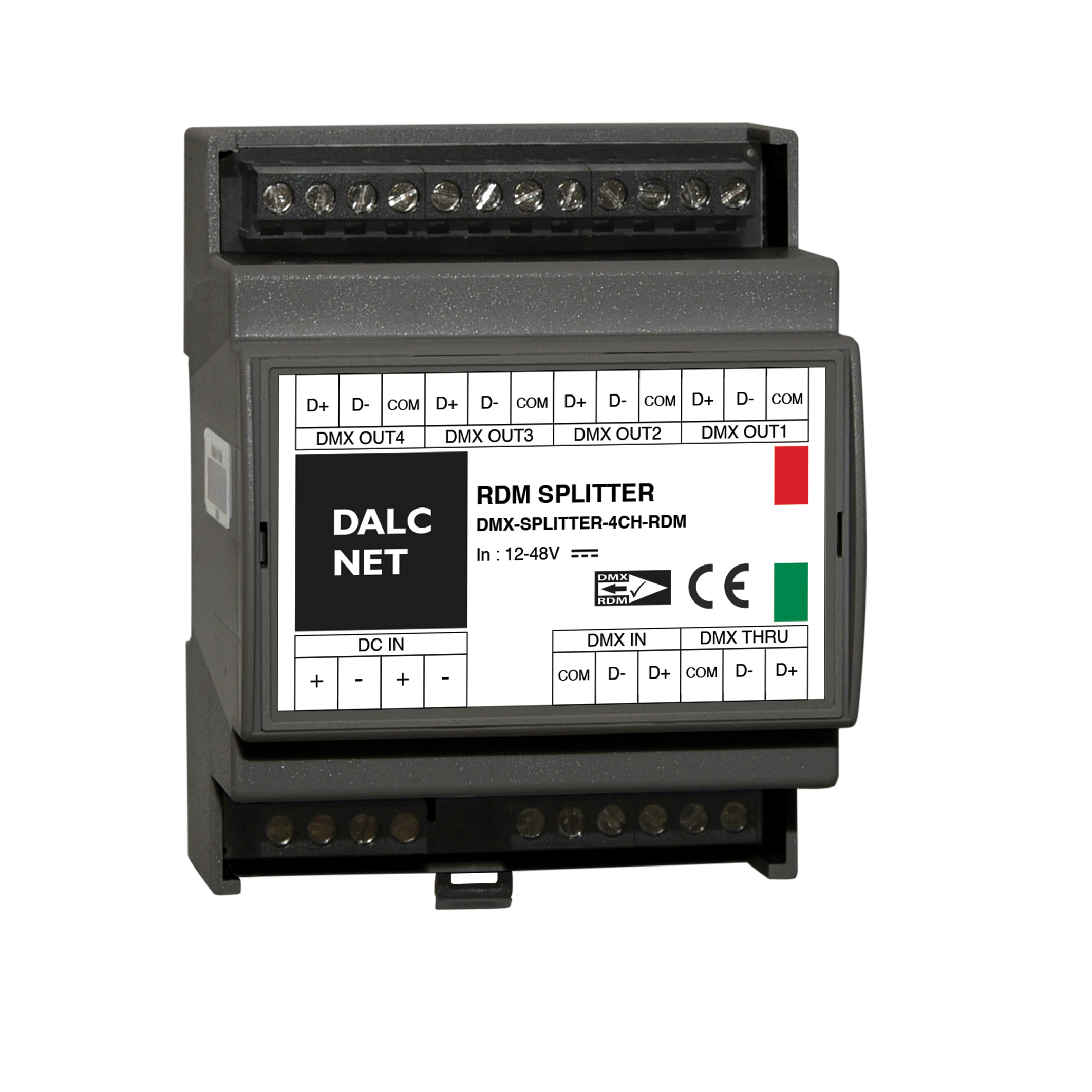
Dalcnet DALI dimmers can operate within standalone DALI systems and, through appropriate interfaces or gateways, form part of larger building automation systems.
Dalcnet models offer configurable operating parameters that can be adjusted without modifying the physical installation.
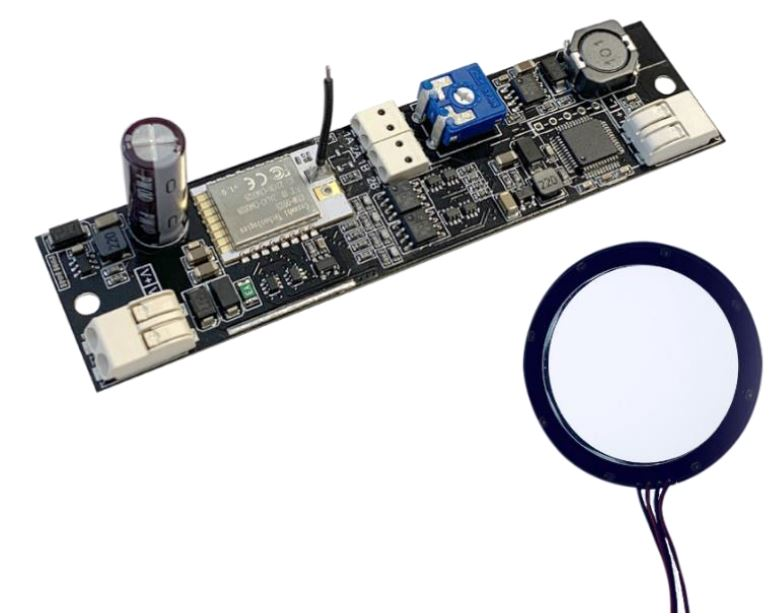
Dalcnet DALI dimmers provide digital control of LED output through the DALI interface. Across the Dalcnet range, configurable parameters, protection features, and support for advanced LED applications make these dimmers suitable for demanding installations.
Dalcnet DALI dimmers support DALI addressing and grouping and can form part of wider lighting control platforms. These capabilities support efficient commissioning, later system reconfiguration, and scalable system expansion.
A DALI dimmer is used to control LED lighting intensity through a digital protocol, allowing precise and flexible system management.
DALI uses digital communication with addressing and feedback, while analog systems control voltage without device-level intelligence.
Yes, each device in a DALI system can be individually addressed and controlled.
Yes, DALI is designed for scalable installations and integration with building automation systems.