Results
No exact match, try with fewer filters or a more generic term
An analog dimmer is a control device that adjusts LED brightness in response to an analog electrical control signal, typically a varying DC voltage.
In LED lighting systems, this type of control is commonly implemented through 0–10V or 1–10V analog interfaces. A low-voltage DC control signal is applied to a compatible control input, and the receiving device regulates the light output accordingly.
Analog dimming uses a continuously varying control signal rather than discrete data commands. The receiving dimming device interprets the control voltage and adjusts the LED output according to its response curve.
For a simplified linear 0–10V example:
10V → maximum light output
approximately 5V → mid-range output
0–1V → minimum light level or off, depending on the device
This defined relationship makes analog dimming simple to implement and predictable in operation.
Analog dimming systems are based on a straightforward control structure.
A dedicated low-voltage control signal is carried to the receiving dimming device over separate control conductors. These control conductors are separate from the power conductors supplying the lighting system.
The receiving dimming device interprets the analog control level and regulates the LED output accordingly, resulting in smooth light modulation.
The analog control signal varies continuously across its operating range, allowing smooth and gradual adjustment of light output.
Analog dimmers are characterized by simplicity, stability, and cost-effectiveness.
The control architecture is straightforward, using an analog control signal and compatible analog-input equipment. This reduces system complexity and facilitates installation and maintenance.
Analog dimming provides a defined relationship between input level and dimming output, making system response predictable and straightforward to calibrate.
Analog dimming is well suited to responsive, low-latency local control because it does not rely on network protocol communication.
However, analog control interfaces do not inherently provide device-level addressing or feedback.
Analog dimmers are widely used in applications where reliability and simplicity are more important than advanced control features.
Offices, retail spaces, and industrial facilities commonly use 0–10V dimming for zone-based lighting control.
Analog dimming is suitable for environments requiring stable performance with minimal configuration effort.
Where centralized digital communication is not required, analog dimming provides an efficient and cost-effective lighting control solution.
Selecting an analog dimmer requires evaluating system requirements and component compatibility.
Electrical compatibility with the LED load is a key factor. The selected dimmer must also support the required voltage control signal.
Control topology should also be considered. Analog dimming is commonly used on a zone basis, with multiple fixtures sharing the same control signal. Individual control requires separate control channels.
Installation is relatively straightforward but requires dedicated low-voltage wiring for the control signal.
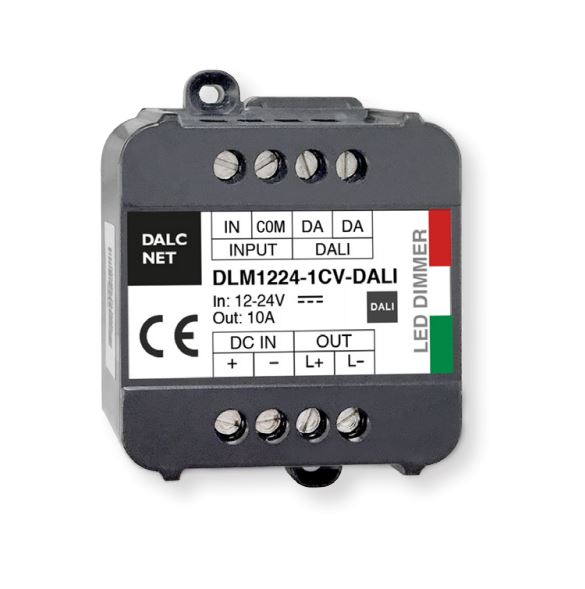
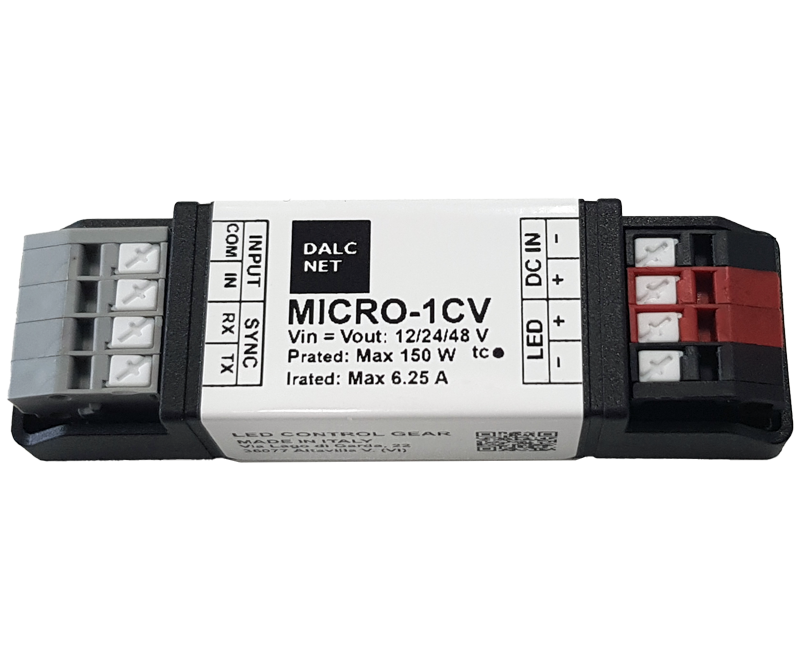
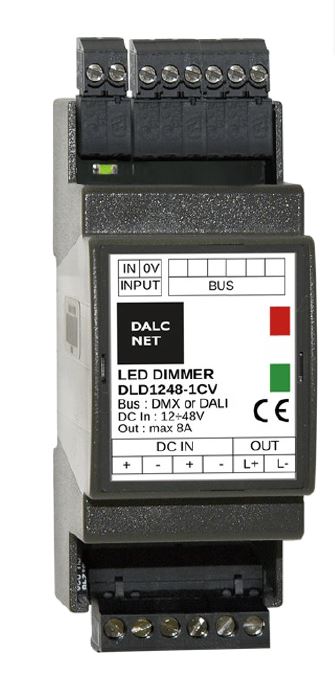
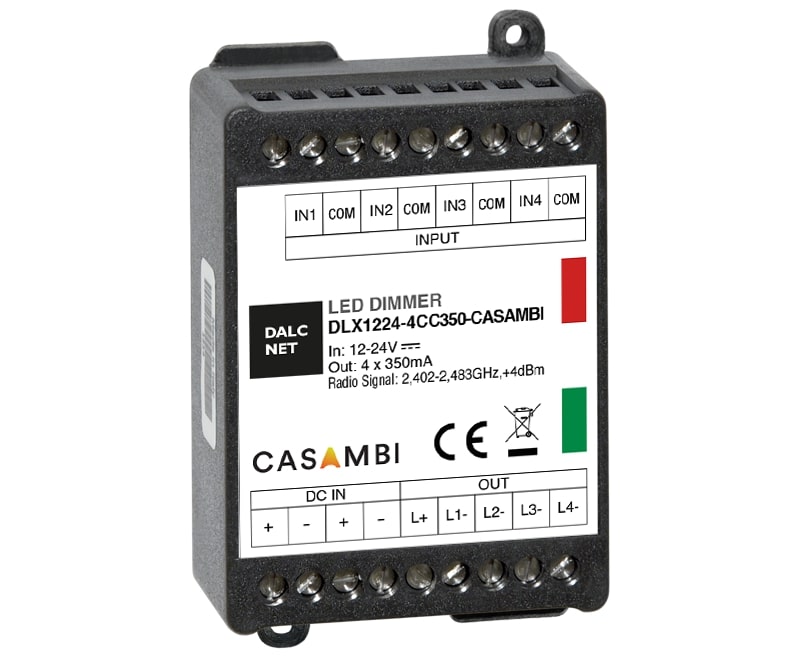
Dalcnet analog dimmers are engineered to provide reliable analog control for professional LED lighting systems.
They are designed for integration with compatible LED lighting equipment and provide stable performance across a wide range of professional applications, from commercial lighting to industrial environments.
Dalcnet solutions focus on simplicity and robustness, enabling efficient implementation of analog lighting control systems with minimal configuration effort.
Dalcnet analog dimmers provide smooth light adjustment through analog control. Their architecture supports stable operation without requiring network communication protocols.
Dalcnet analog dimmers can be integrated into lighting systems where centralized digital communication is not required, providing an efficient solution for zone-based lighting control.
An analog dimmer is used to control LED brightness through a continuous electrical signal, typically 0–10V.
Analog dimming uses a continuously varying electrical control signal, while digital systems exchange control information through communication protocols and digital commands.
No. 1–10V is also widely used, and other analog control methods exist. 0–10V remains one of the most common control methods in commercial LED lighting.
Typically not when multiple luminaires share the same analog control line. Individual control is possible, but each independently controlled lighting point requires its own control channel.