Results
No exact match, try with fewer filters or a more generic term
In professional lighting projects, advanced DMX gateways can perform several integration functions, including:
converting signals between Ethernet-based protocols such as Art-Net or sACN and DMX512;
routing lighting data between network protocols and DMX systems; and
enabling communication across heterogeneous control environments.
This makes it possible to control large-scale lighting networks, including architectural façades, entertainment systems, and smart buildings, without adding unnecessary complexity to the control architecture.
Advanced gateways can also support bidirectional communication for remote supervision, diagnostics, and configuration, helping engineers monitor system status and troubleshoot issues.
The result is a scalable and flexible control architecture in which different technologies can coexist and interact efficiently.
The role of a DMX gateway goes beyond signal conversion. In integrated lighting environments, it can connect different control domains, including:
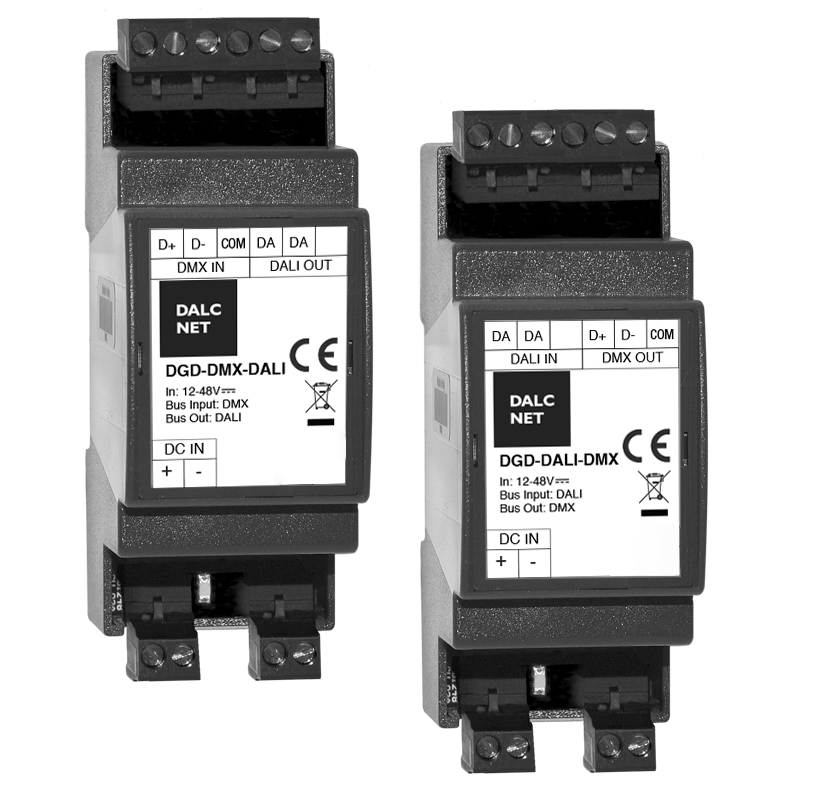
bridging DMX and DALI systems;
interfacing Ethernet networks with field devices;
linking lighting control platforms with automation systems.
By translating and mapping data between protocols, the gateway helps coordinate control commands, scenes, and dimming levels across connected systems.
This capability is particularly important in hybrid installations, where architectural lighting, dynamic effects, and automation systems must operate as a coordinated environment.
DMX gateways are typically deployed in environments where performance, reliability, and scalability are essential. These include architectural lighting installations, large commercial spaces, entertainment venues, and infrastructure projects.
In these environments, the ability to route control data efficiently and integrate different systems allows engineers to design flexible solutions that can accommodate future expansion.
Whether used in centralized control rooms or distributed installations, the gateway serves as an integration backbone, supporting stable communication across connected systems.
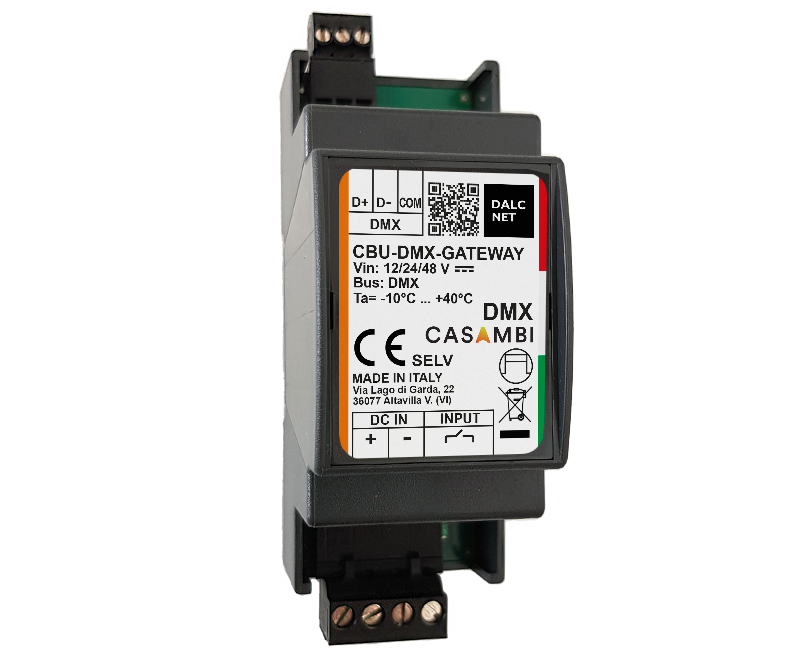
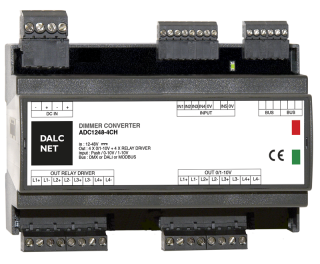
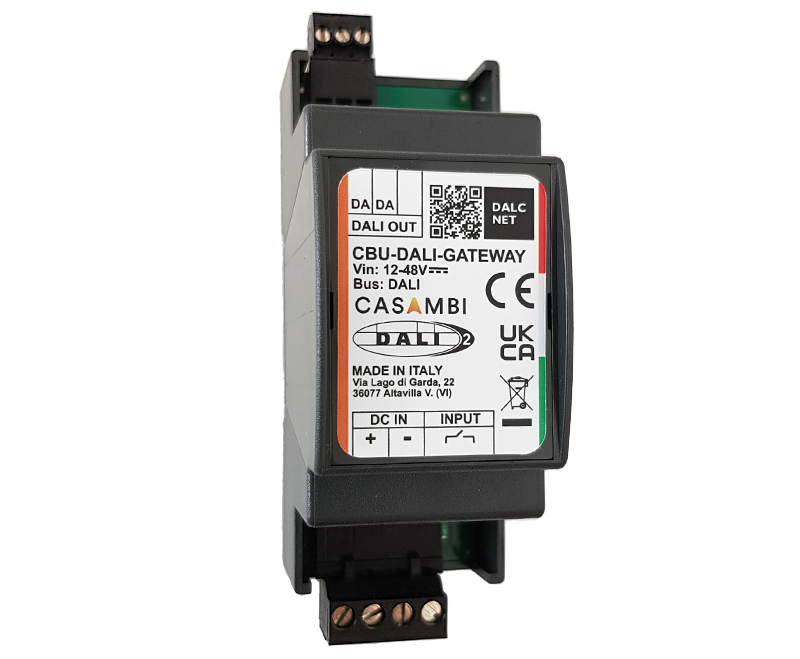
As a manufacturer specializing in lighting control systems and LED dimmers, Dalcnet develops DMX gateway solutions with a strong engineering focus, combining reliable hardware with advanced firmware capabilities.
Dalcnet gateways are designed to simplify integration while maintaining a high degree of configurability, enabling system designers to adapt each solution to specific project requirements.
The approach is based on three key principles:
Interoperability, enabling integration with widely used protocols and systems.
Flexibility, through configurable mapping, scalable architectures, and firmware customization capabilities.
Reliability, reinforced by Dalcnet’s design, testing, and production processes.
This allows Dalcnet to support OEMs, system integrators, and lighting professionals in developing advanced control systems while maintaining performance and stability.
In complex lighting systems, integration is the real challenge. A DMX gateway must not only convert signals but also support coordinated operation between different technologies.
Dalcnet solutions are designed with this objective in mind. By combining protocol expertise, R&D capabilities, and system-level thinking, Dalcnet enables engineers to build lighting infrastructures that are scalable and adaptable to evolving project requirements.
A DMX gateway is not just a technical component—it is a strategic element in the design of modern lighting control systems.
As a specialized lighting control manufacturer, Dalcnet develops gateway technologies that simplify integration, enhance system reliability, and support the evolution of connected, intelligent lighting environments.
A DMX gateway is used to connect DMX-based lighting systems with other control networks and technologies, such as Ethernet-based networks, DALI systems, or building automation platforms. This integration allows engineers to connect, control, and manage multiple lighting devices and control domains within a centralized or coordinated system, even in complex and heterogeneous installations.
A DMX gateway converts and routes signals between different protocols. For example, it can translate Ethernet-based protocols such as Art-Net into DMX512 or map DMX channels to other systems such as DALI. This enables coordinated control across connected systems within the lighting network.
A DMX controller primarily generates and manages DMX control data, including lighting scenes, while a DMX gateway primarily acts as an interface or translator between different systems. The gateway does not replace the controller; it extends the system’s connectivity by allowing DMX to communicate with other control protocols and networks.
A DMX gateway is typically used when a DMX lighting system needs to integrate with other control protocols, networks, or automation systems. It is commonly used in complex or large-scale installations such as architectural lighting, entertainment systems, and smart buildings.